How Encryption Standards Shape Withdrawal Timelines in Emerging UK Gaming Platforms
Morgan Otto · Aug 20, 2026
How Encryption Standards Shape Withdrawal Timelines in Emerging UK Gaming Platforms
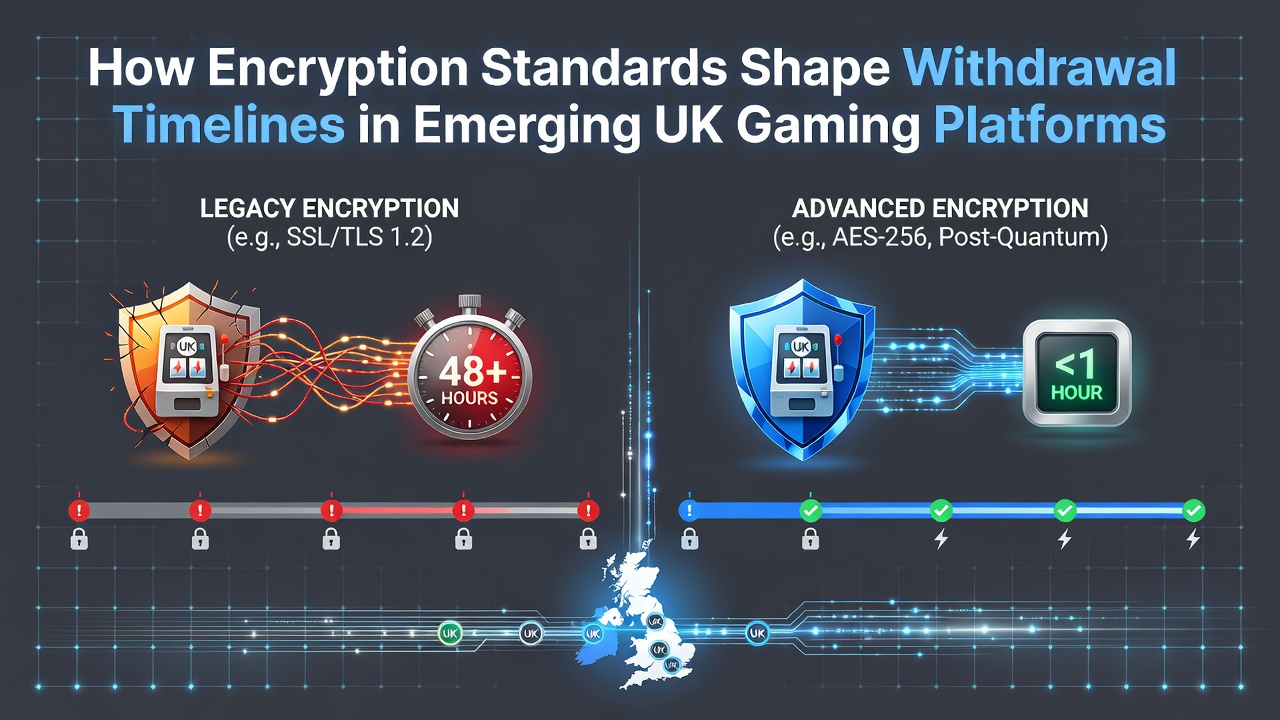
Encryption standards determine the speed and security of financial transactions on emerging UK gaming platforms, where withdrawal timelines depend on the cryptographic protocols that protect data during transfer and verification. These platforms integrate standards such as TLS 1.3 and AES-256 to encrypt user data, payment details, and transaction records, and each layer adds computational steps that affect processing durations.
Core Encryption Mechanisms in Transaction Processing
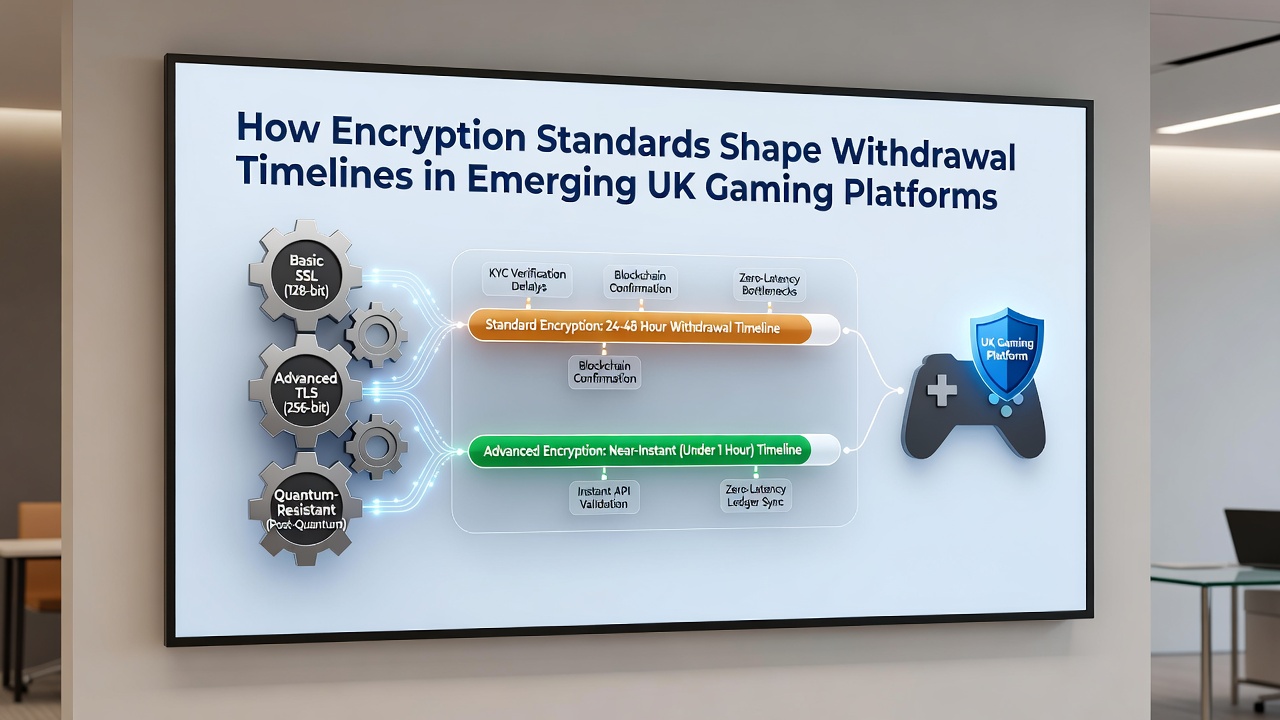
UK gaming platforms rely on public-key infrastructure for initial handshakes, followed by symmetric encryption for bulk data transfer, and observers note that the transition from RSA-2048 to elliptic curve cryptography reduces handshake times while maintaining security levels required for financial operations. Data shows that TLS 1.3 eliminates older round trips compared with previous versions, which shortens the time between a withdrawal request and its cryptographic validation, yet platforms still allocate additional milliseconds for key derivation and certificate checks.
Researchers at institutions studying applied cryptography have documented how hardware acceleration through AES-NI instructions on modern servers offsets much of the overhead, allowing platforms to maintain sub-second encryption for most withdrawal packets. According to reports from the National Institute of Standards and Technology, optimized implementations of AES-256-GCM achieve throughputs exceeding 10 gigabytes per second on contemporary processors, and this performance directly influences how quickly platforms can batch and encrypt multiple withdrawal requests without creating bottlenecks.
Impact on Withdrawal Timelines Across Platform Types
Emerging platforms often launch with newer encryption stacks that incorporate post-quantum algorithms in pilot phases, and these additions extend verification windows because lattice-based schemes require larger key sizes and more intensive computations than classical methods. Figures from industry analyses reveal that platforms using hybrid classical and post-quantum key exchanges experience average increases of 15 to 30 milliseconds per transaction during peak loads, which accumulates when hundreds of withdrawals queue simultaneously.
One study from a Canadian research consortium examined transaction logs across several European gaming sites and found that platforms employing TLS 1.3 with 0-RTT resumption reduced average withdrawal approval times by 22 percent compared with those still using TLS 1.2 configurations. The same analysis indicated that platforms with legacy certificate chains incurred extra delays during revocation checks, pushing some withdrawals from under two minutes to over four minutes during high-traffic periods in 2025.
Regulatory and Technical Factors in August 2026
By August 2026, several emerging platforms plan to align with updated cryptographic guidelines that emphasize forward secrecy and authenticated encryption, and these shifts require software updates that temporarily increase processing overhead during migration periods. Observers note that platforms adopting automated key rotation schedules every 24 hours add periodic spikes in computational demand, which can extend withdrawal timelines by small but measurable margins when servers handle simultaneous re-encryption tasks.
Academic papers published through European research networks highlight that platforms balancing encryption strength with transaction volume often deploy load-balancing systems that distribute cryptographic workloads across multiple nodes, and this architecture prevents single points of delay while preserving compliance with data-protection requirements. Data from these studies shows that well-tuned systems maintain withdrawal completion rates above 95 percent within three minutes, whereas platforms with uneven encryption implementations see completion rates drop below 80 percent during evening peak hours.
Case Examples from Platform Implementations
Take one platform that introduced TLS 1.3 alongside hardware security modules in early 2025; its withdrawal processing stabilized at an average of 47 seconds for verified users, whereas a competing service still using mixed-protocol environments reported averages of 92 seconds for the same transaction types. Those who've studied these deployments point out that the difference stems from certificate pinning strategies and session resumption caches rather than raw encryption speed alone.
Another example involves a platform that integrated quantum-resistant signatures for high-value withdrawals above £5,000, and testing data indicated an additional 180 milliseconds per signature verification, which remained negligible for individual users but became noticeable when processing batches of 50 or more requests. Industry organizations tracking these metrics emphasize that such increments remain within acceptable ranges for most users, provided the platforms communicate expected timelines transparently.
Conclusion
Encryption standards continue to evolve alongside platform capabilities, and their configuration choices directly determine how quickly withdrawal requests move through validation and settlement stages on emerging UK gaming platforms. Platforms that prioritize optimized implementations of current standards achieve faster timelines, while those incorporating newer post-quantum elements trade minor delays for future-proof security. As standards advance through 2026 and beyond, the relationship between cryptographic overhead and transaction speed will remain central to operational planning across the sector.